
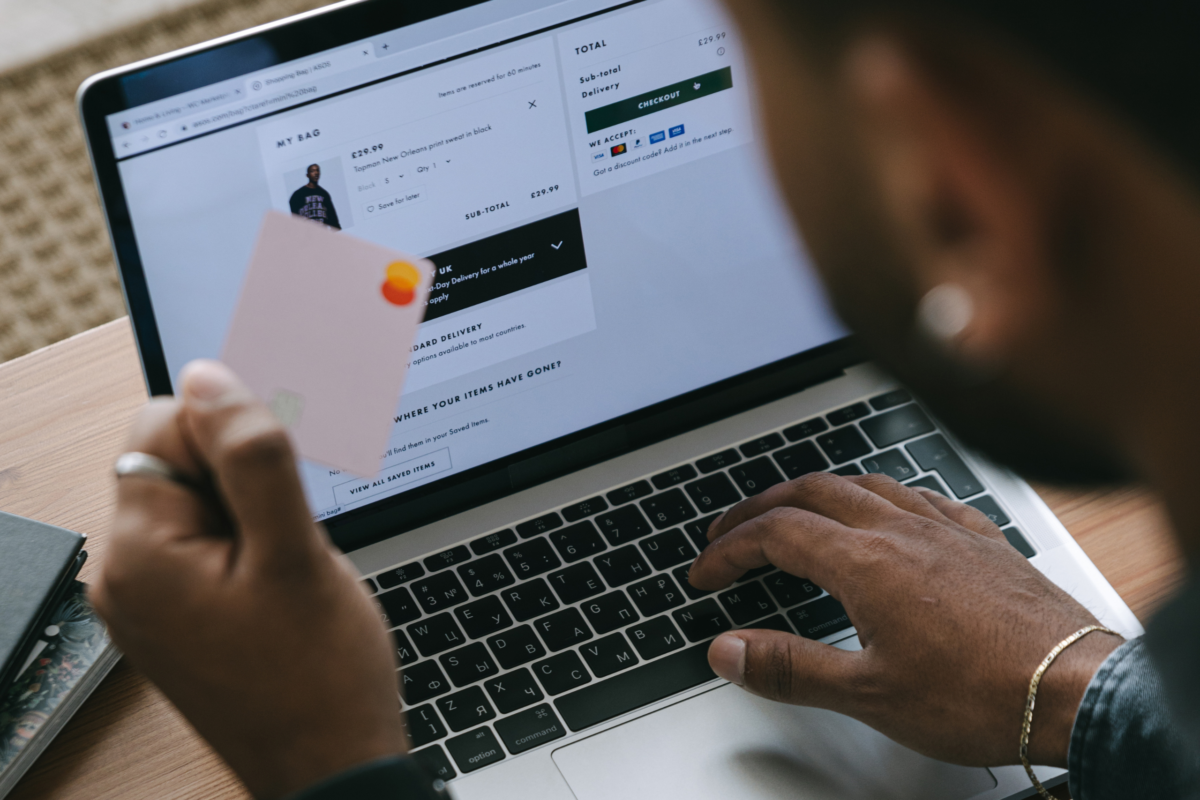
Online ordering used to feel like a “nice extra” for retail, something the big e-commerce brands did well, and local stores experimented with when they had time.
That era is over.
In 2026, online ordering is no longer an e-commerce luxury. It’s a baseline expectation. Your customers don’t separate “online” and “in-store” the way operators do. They just want the fastest path from wanting something to having it, with clear updates, minimal friction, and a pickup or delivery option that fits their day.
And if that sounds familiar, it’s because restaurants solved the operational version of this problem years ago. Order-ahead. Make it. Stage it. Handoff. Deliver. Update the guest. Repeat.
Retail businesses now need that same order-ahead + fulfillment flexibility, without turning the back office into a messy maze of manual steps, re-keying, missed items, and inventory surprises.
In this guide, we’ll walk through what “online ordering for retail businesses” actually means in 2026, the fulfillment models that matter most, the POS features that keep it running smoothly, and a MICROS Simphony-focused section for operators who need enterprise-grade control across channels.
Why Online Ordering Matters for Retail, Not Just Food
At the surface level, online ordering is about convenience. Customers want to browse on their phone, pay in seconds, and pick up fast, especially with BOPIS and curbside. But the deeper truth is this:
Online ordering changes what you’re competing against.
Your “competition” isn’t just the store down the street anymore. It’s the easiest buying experience in your customer’s life. That could be a national brand, a marketplace, or a local competitor who has pickup workflows dialed in and makes the whole thing feel effortless.
Operationally, the payoff can be massive when it’s designed well. You reduce phone orders and the inevitable miscommunications that come with them. You cut down manual entry mistakes. You create clearer pickup workflows. And you gain more confidence in inventory because the system is doing the heavy lifting instead of your staff trying to remember what’s available, what’s staged, and what’s still being packed.
The big idea: online ordering isn’t a marketing feature. It’s operational infrastructure.
What “Online Ordering for Retail Businesses” Actually Includes
When retail owners say they “need online ordering,” they’re often imagining a checkout page.
But in practice, online ordering for retail businesses is a fulfillment strategy, a set of ways customers can buy, and ways your team can deliver on the promise without chaos.
BOPIS (Buy Online, Pick Up In Store)
BOPIS is the modern “click-and-collect” flow: a customer places an order, gets confirmation, and picks up once it’s ready.
It wins because it satisfies the “buy now” expectation without the cost, delays, and complexity of shipping. For a lot of retail categories, it’s the sweet spot: fast for the customer, controlled for the operator.
The operational requirement is simple but non-negotiable: you need a clear pick/pack/stage process and a way to confirm readiness, so your team isn’t digging through shelves while the customer waits.
Curbside Pickup
Curbside is BOPIS with one extra promise: speed with minimal friction.
It’s especially powerful for grocery, convenience, and high-traffic retail where “in-and-out” matters. But curbside only works when the handoff is clean. That means staged orders, strong notifications, and a consistent process: where it gets staged, how staff are alerted, and how the handoff is confirmed.
Without that structure, curbside becomes a daily source of stress, because the customer expectation is higher, and the margin for delay is smaller.
Local Delivery
Local delivery has matured into a normal retail expectation in many markets, same-day or scheduled drop-offs within a defined radius.
It tends to perform best for categories where immediacy matters (grocery, flowers), where convenience creates loyalty (coffee subscriptions, specialty items), or where the experience feels “premium” (boutique drop-off).
But here’s the key: delivery isn’t just logistics. It’s coordination. If the ordering system doesn’t match your pick/pack process, teams get stuck in a loop of last-minute scrambling.
Ship-from-Store (SFS) / Hybrid Fulfillment
Ship-from-store is where retail fulfillment starts to look like a real operation. The store becomes a mini fulfillment hub. Orders route to the best location, inventory needs to be visible, and item data must be consistent across channels.
This is especially relevant for multi-location retail and inventory-heavy concepts. But SFS only works when the system can support it, because “we’ll figure it out” quickly turns into “we can’t keep up.”

The POS Features That Make Retail Online Ordering Work
This is where most retail teams either win or lose the game.
If online orders live in one system, inventory lives in another, and fulfillment is managed through staff memory and sticky notes, you don’t have an online ordering strategy, you have a daily fire drill.
A modern POS needs to function as the system of record across channels. Here are the pillars that matter most.
Real-time inventory and item availability
Overselling is expensive. It creates refunds, cancellations, and frustrated customers who expected a simple pickup. Real-time inventory visibility prevents that, especially when you can display “what’s in stock at this location” rather than forcing customers into guesswork.
Unified order flow (no re-keying)
Manual entry kills speed and introduces errors. Online orders should land directly into the POS workflow your team already runs. The less “translation” your staff has to do between systems, the more reliable your fulfillment becomes.
Fulfillment routing and status updates
Customers don’t just want the order, they want confidence. “Packed,” “ready for pickup,” pickup time windows, and clear staging steps aren’t cosmetic features. They’re what keep your team coordinated during rush periods.
Payments and refunds that reconcile cleanly
Retail fulfillment gets messy in real life: substitutions, partial refunds, split tenders, tips (where relevant), exchanges. If your payments and refunds don’t reconcile cleanly, you’re creating accounting pain and operational distrust in the system.
Reporting and insights
If online ordering is going to be a real channel, you need visibility into performance: peak pickup times, best online SKUs, bottlenecks in fulfillment, and location-by-location comparison. You can’t optimize what you can’t see.
Integrations that keep your stack flexible
Delivery services, loyalty, CRM, accounting, ecommerce storefronts, retail is rarely “one system only.” Open integration ecosystems reduce vendor lock-in and make it easier to build an omnichannel stack that fits your exact fulfillment model.
How MICROS Simphony Supports Online Ordering + Connected Fulfillment
This section is for operators who are thinking beyond “add online ordering” and moving toward enterprise-grade control, especially if you’re high volume, multi-location, or running a hybrid model (prepared items + packaged retail).
The central advantage of a platform like MICROS Simphony is that it’s built to reduce fragmentation. Online ordering, delivery integrations, menu/item consistency, reporting, these aren’t treated as afterthoughts. They’re part of a connected operational environment.
Simphony Online Ordering (integrated digital ordering flow)
Simphony offers built-in online ordering designed to connect ordering directly into POS operations, reducing manual re-entry and improving order accuracy.
For retail-forward operators, this is especially relevant in hybrid concepts like coffee shops, markets, and modern convenience models where customers might order a prepared item and packaged items in the same transaction. When item data stays consistent and the order flow is unified, the handoff becomes smoother, and the customer experience feels effortless.
Delivery Connector ecosystem (third-party delivery integrations)
Simphony includes Delivery Connectors inside Simphony Home to manage delivery platform integrations.
Why that matters: centralized control. Instead of delivery orders living in disconnected tablets and separate workflows, integrations can be managed and maintained in a more controlled operational system. The goal is simple, one operational source of truth instead of multiple “mini-systems” competing for attention.
Open integrations and operational extensions
Oracle positions Simphony as an open integration POS data platform, supporting common categories like online ordering, delivery, kiosks, payments, loyalty, and inventory tools.
In retail terms, this means you can build an omnichannel stack that matches your fulfillment model, pickup + delivery + loyalty + inventory discipline, without duct-taping your operation together.
Practical scenarios that make this real
Picture a coffee shop where customers order-ahead a latte and add a retail item (beans or merch) for a single pickup. Or a market where pickup orders route cleanly, and delivery integrations are managed centrally instead of through scattered devices. Or a multi-location operator that needs consistent item data and reporting across sites, not a different “version of reality” at each store.
When the POS is the system of record, these scenarios become repeatable instead of fragile.

Questions Retail Owners Should Ask Before Choosing a POS for Online Ordering
Before you commit to a platform, or rebuild what you already have, these questions will save you from expensive surprises:
- Can customers actually see location-specific availability, based on real inventory?
- Do online orders flow directly into POS workflows, or does your team have to re-enter them?
- How are pickups staged and tracked, packed, ready, picked up, so the handoff is consistent?
- Can you support BOPIS, curbside, and local delivery without bolt-on chaos?
- What integrations exist for delivery, loyalty, inventory, and ecommerce tools?
- And what reporting shows true online profitability, fees, refunds, and labor impact included?
If you can’t get clear answers, you’re not choosing a system, you’re choosing a set of future problems.
Online Ordering Is Fulfillment, Not Just Checkout
Online ordering for retail businesses isn’t about adding a button to your website. It’s about building a connected fulfillment system that customers can rely on, and your team can execute without stress.
If you want BOPIS, curbside, and delivery to run smoothly, your POS has to be the system of record. That’s where inventory confidence lives. That’s where orders flow without re-keying. That’s where status updates, reporting, and operational discipline come together.
If you’re ready to see what modern POS-driven fulfillment looks like for your retail operation, book a demo and let’s map the right ordering and fulfillment workflow for your business.
Sign Up for our Newsletter